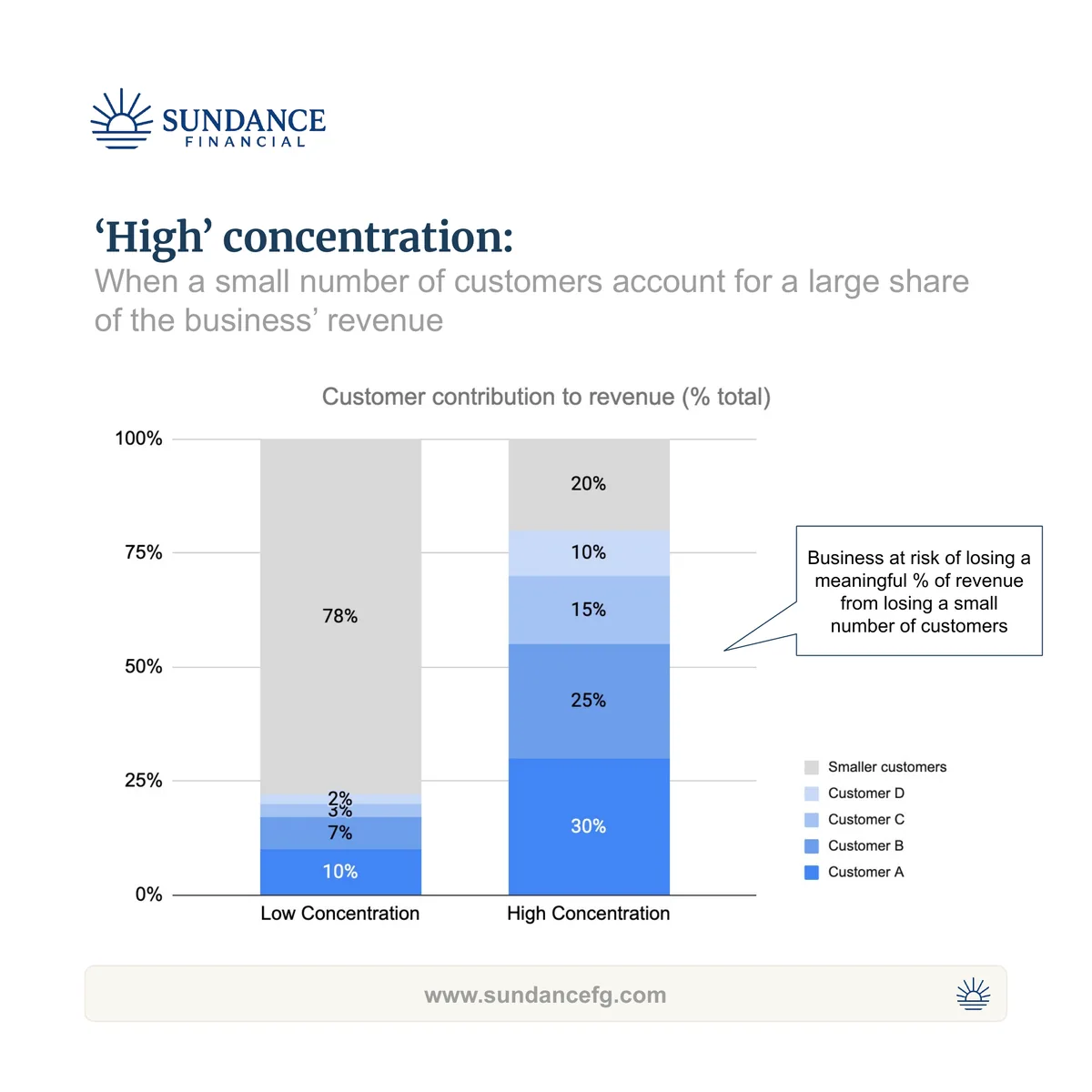

One of the first questions that most buyers ask in M&A is “How much customer concentration is there?”
The concern makes intuitive sense. If one customer accounts for 20% of revenue, then the business is at risk of losing a fifth of its revenue overnight.
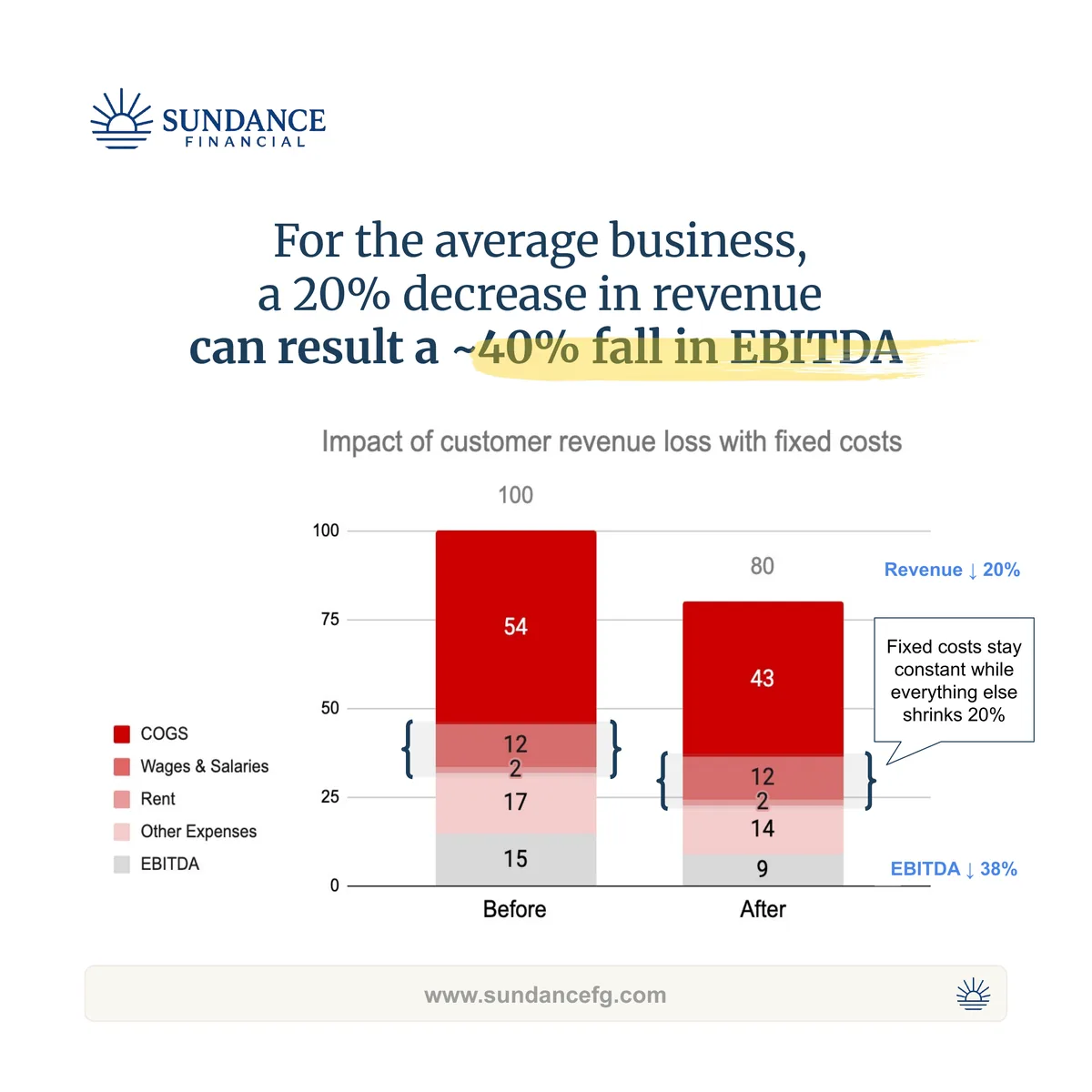
But the reality is worse than that. A business that loses 20% of its revenue typically loses a far greater percentage of its earnings as a result.
The reason is operating leverage.
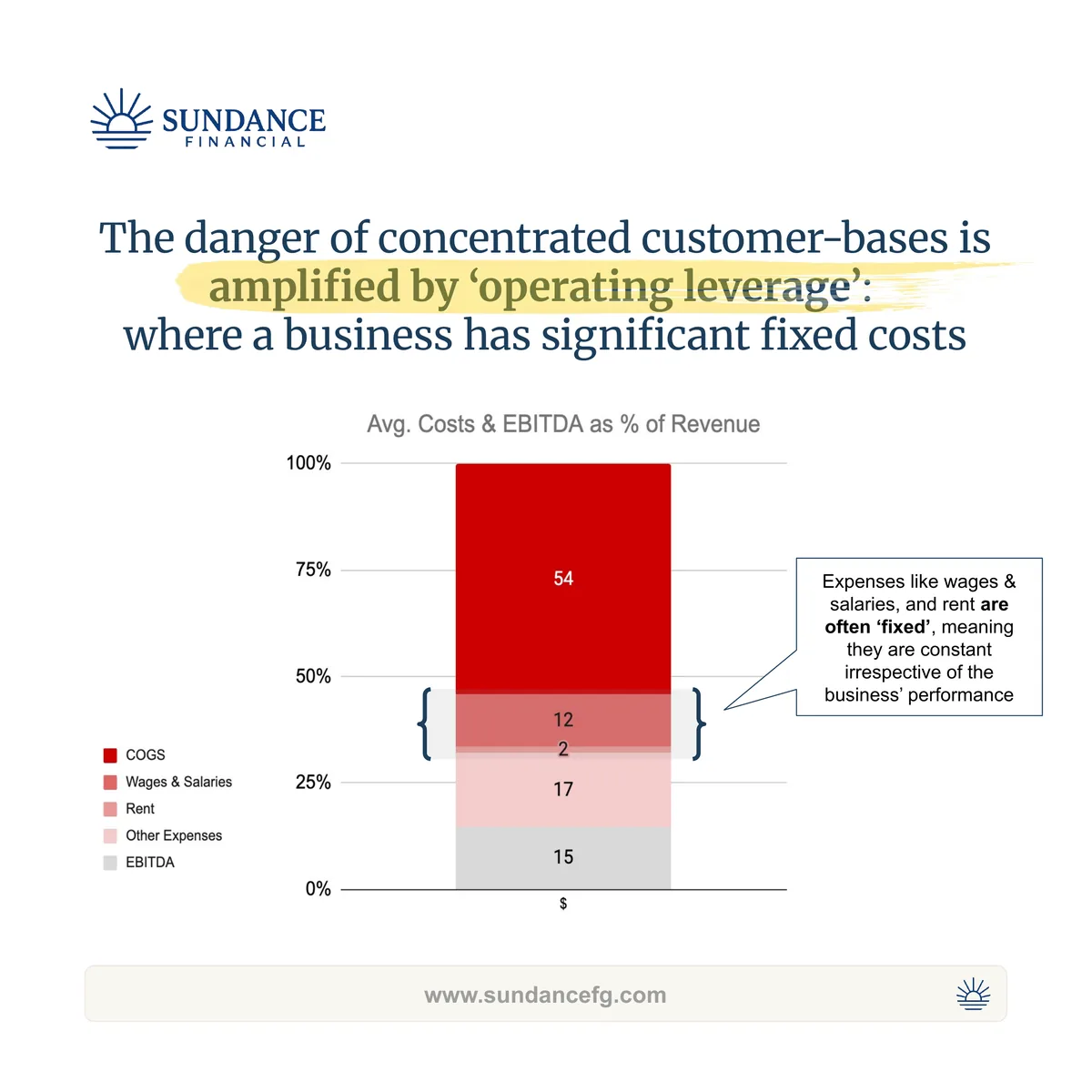
Most businesses carry significant ‘fixed’ costs—those that don’t scale with volume or revenue. These costs persist whether the business is operating at 0% or 100% capacity.
For most businesses, fixed costs include expenses like rent, wages, and salaries (non-commission).
According to the IRS, the average US business spends 14% of its revenue on rent and indirect wages and salaries, and has a 15% EBITDA margin.
If the average business loses 20% of its revenue, EBITDA would fall by almost 40%.
While it may be true that ‘in the long-run, all costs are variable’, these swings can cripple a business in the short-term.
For business owners: managing and mitigating customer concentration is critical. Address this before it becomes a deal-breaker.
Diversify your customer base, establish long-term contracts, build switching costs, and create structural dependencies that make you harder to leave.
The best time to address concentration risk is before you’re trying to sell.