

Most business owners have never heard of SDE, but it can often be the only metric that matters in a sale.
SDE stands for Seller’s Discretionary Earnings.
Like EBITDA, SDE is a measure of profitability and a proxy for cash flow—but it’s the one used on Main Street (<$5M revenue).
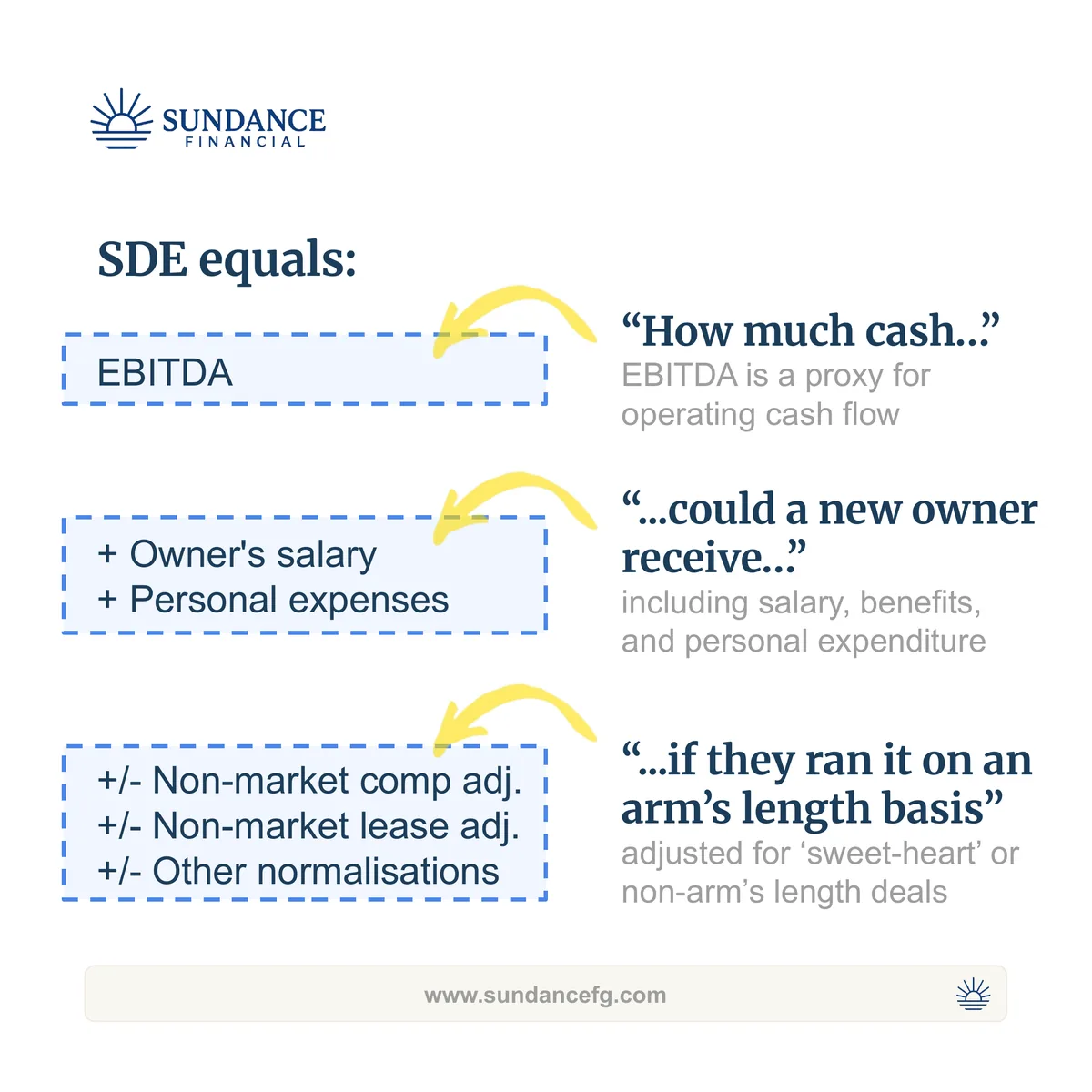
SDE answers a simple question:
“How much cash could a new owner receive from the business if they ran it at arm’s length?”
SDE = EBITDA
+ Owner’s salary and benefits
+ Personal and discretionary expenses
+/- Non-market compensation adjustments
+/- Non-market lease and rent adjustments
+/- Other normalisation adjustments
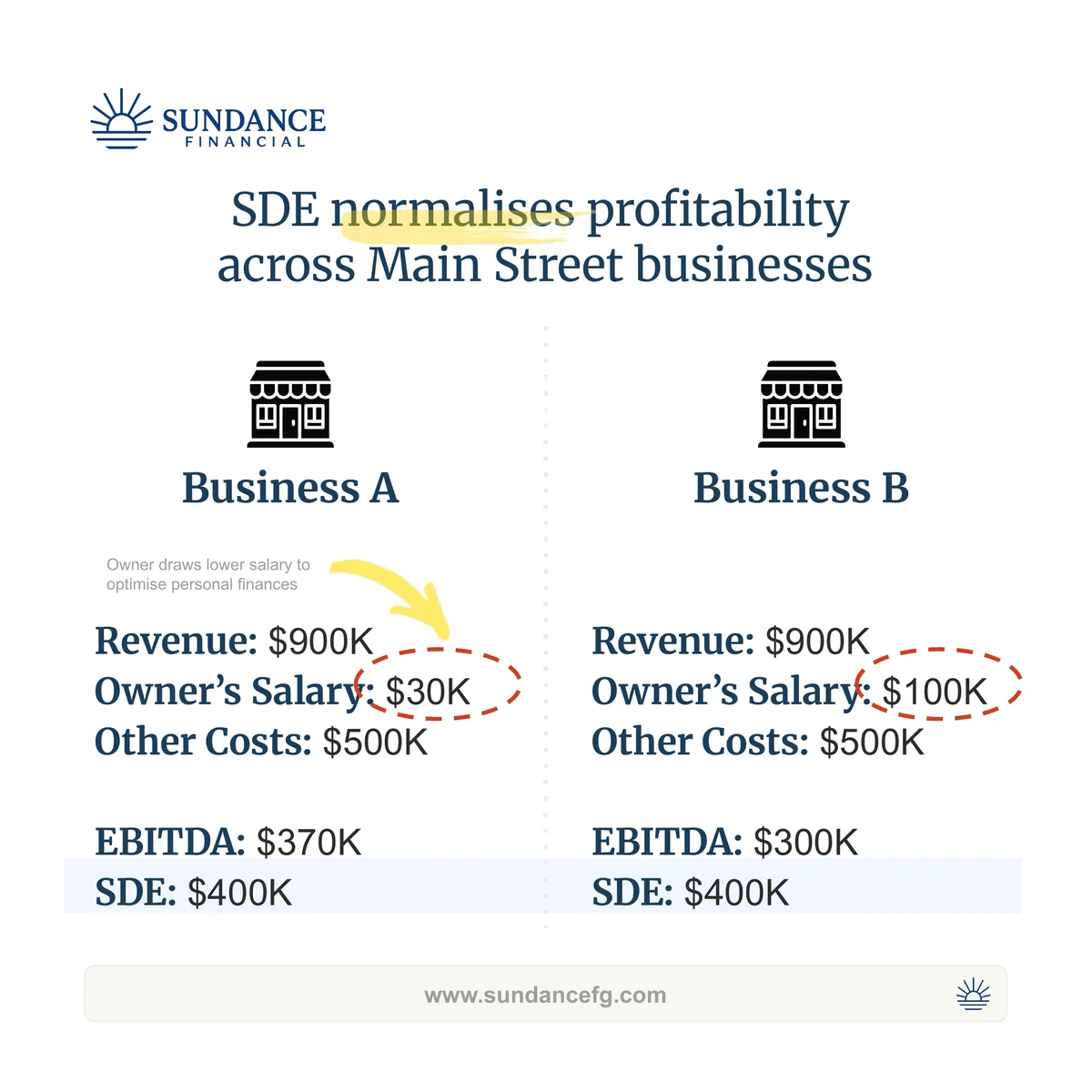
SDE matters because it normalises the financial quirks common in smaller businesses (e.g. owners paying themselves above/below market salaries) to give a like-for-like comparison of profitability across businesses.
Because of this, Main Street businesses are generally valued on a multiple of SDE, and not EBITDA.
If you’re a Main Street owner thinking about selling, pay attention to SDE. It’s often the number buyers will care about.
Read more: What does SDE mean for my business?