

5.7% of today’s Main Street buyers are ‘searchers’.
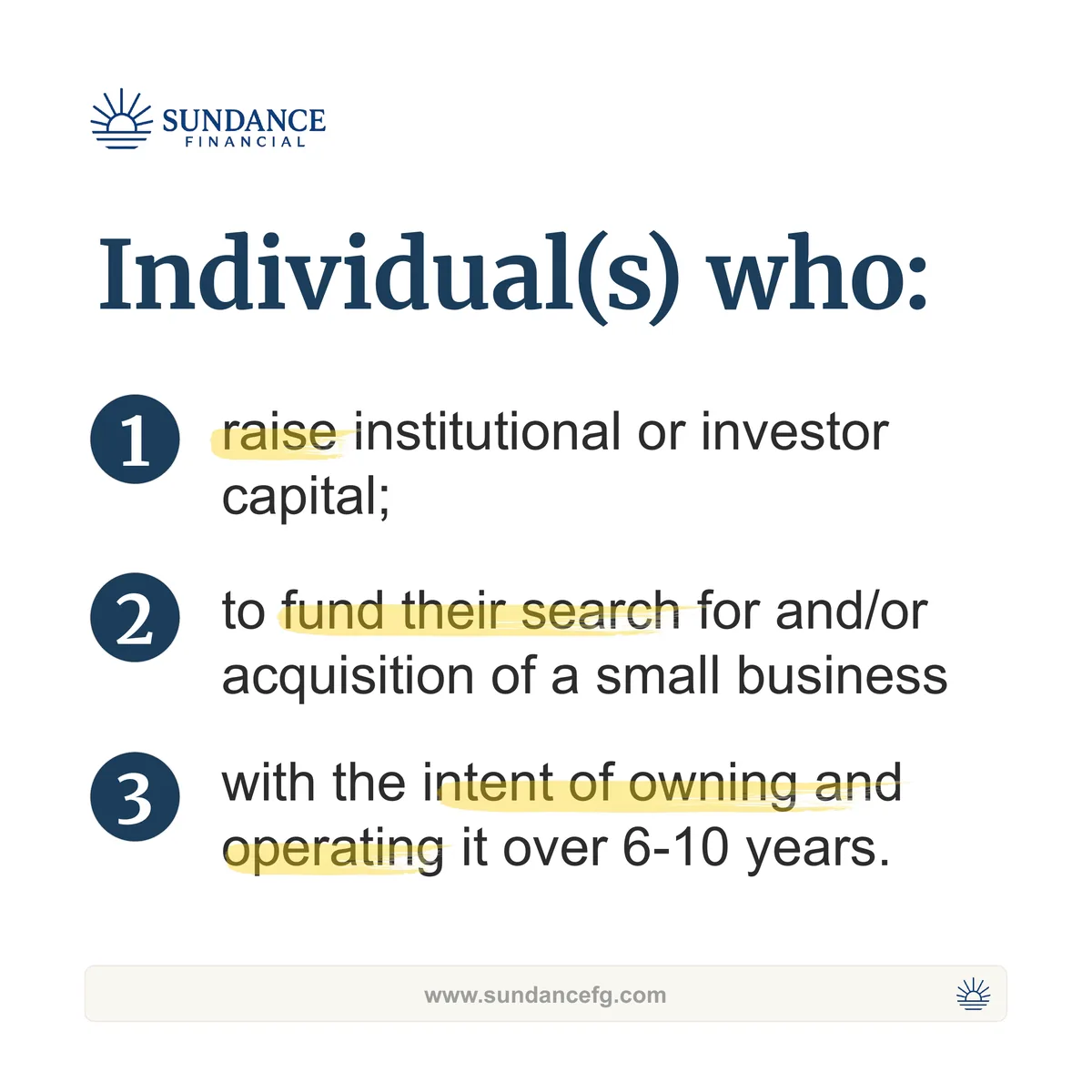
Searchers are individuals who:
- raise institutional and investor capital;
- to fund their search for and/or acquisition of an attractive small business;
- with the intent of owning and operating it over a holding period (typically 6-10 years).
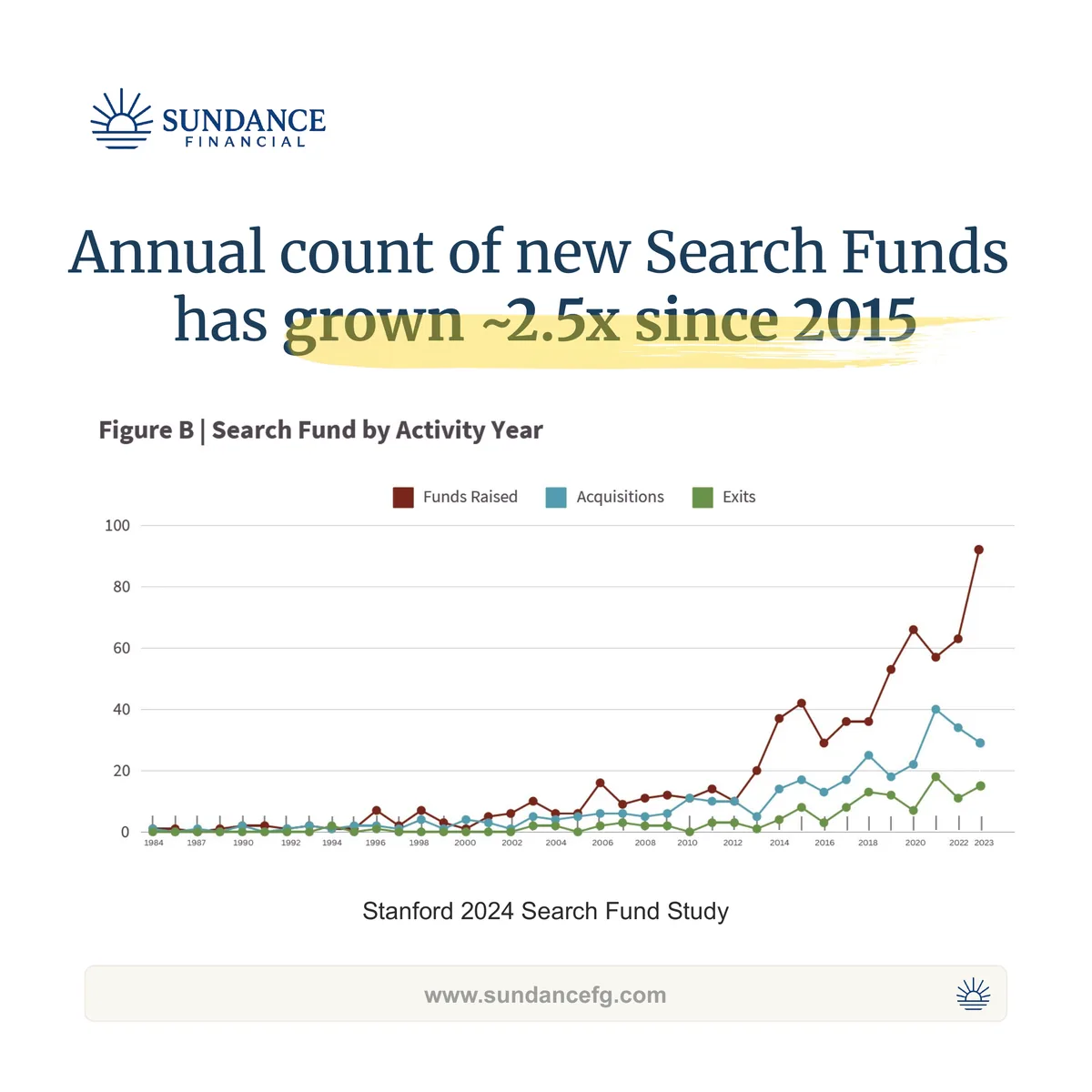
While searchers remain a small and nascent category of business buyers, they’ve seen massive growth over the past 10 years.
According to Stanford, there was a 46% increase in the number of ‘search funds’ raised by first-time searchers between 2022 and 2023.
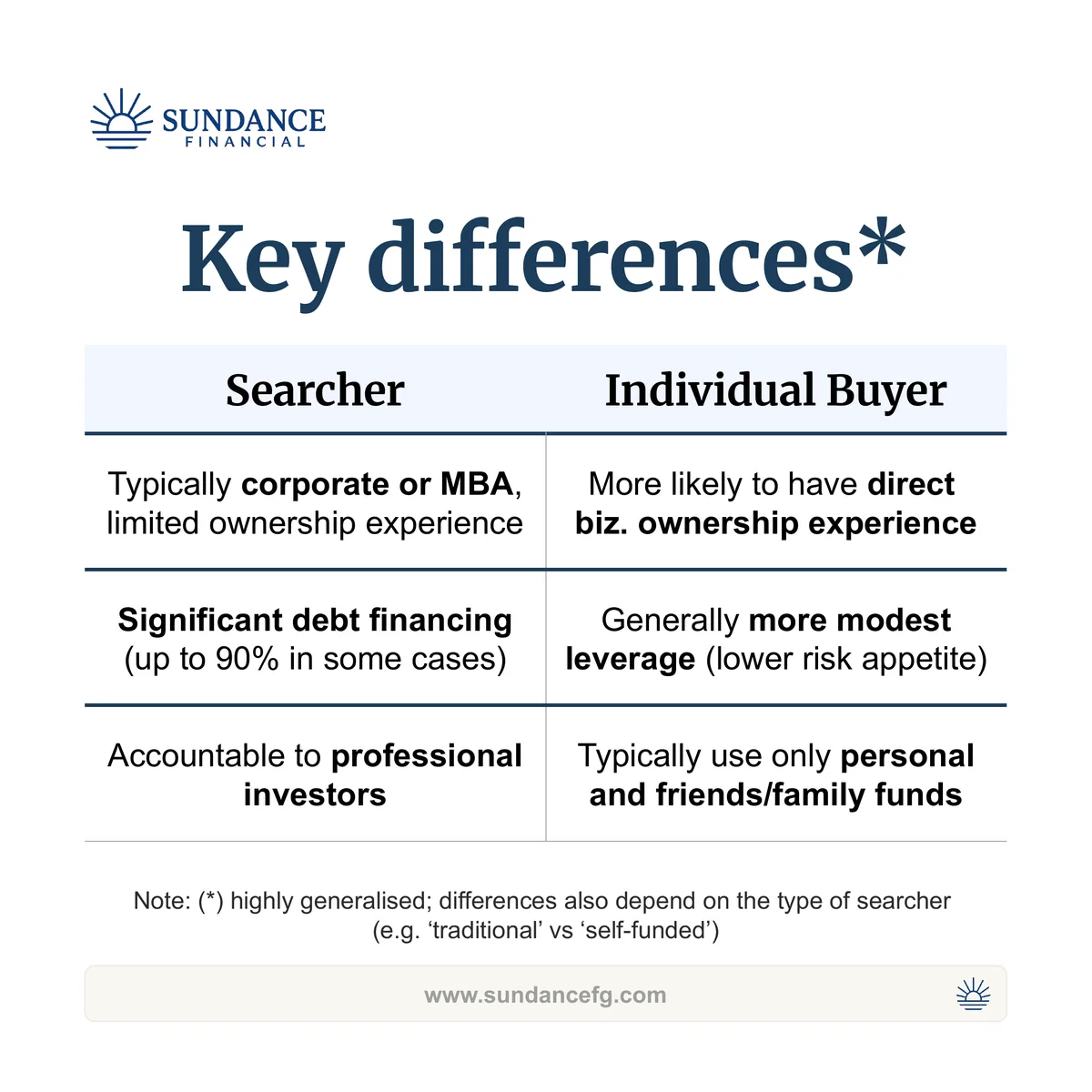
Searchers differ from individuals who acquire businesses in that:
- They typically come from corporate or MBA backgrounds, with limited direct business ownership experience.
- They generally raise a significant amount of debt to finance their acquisitions—sometimes up to 90% of the purchase price.
- They are accountable to professional investors, which shapes how they evaluate risk, negotiate terms, and structure deals.
Main Street owners who know how to position their businesses are more likely to attract institutional-backed search buyers at premium valuations.